Short historical notes of my clan

Short Historical Notes
The Thenu-clan is a clan of the adat village HUTUMURI on the isle of Ambon, province Maluku of Indonesia. Adat refers to the specific central moluccan culture and values. In earlier times the old village of Hutumuri is called LOUNUSA on the mountain MAOT. It was formed by 5 soa, each soa or tribe consist of several clans.
In search of spice the Portuguese traders arrived in Ambon in 1511 and also brought Christian faith.To strengthen their power they clashed with Islamic traders and rulers. At that time LOUNUSA and their rulers resist the foreign intruders and they had bond with HITU rulers on the other peninsula of Ambon. Several times LOUNUSA was attacked by the Portuguese and their allies. A heavy expedition of punishment took place in 1569. At last LOUNUSA fall under the power of the Portuguese and was baptized. The famous missionary Franciscus Xaverius also did his missionary job in this region.

In 1602 the establishment of the VOC, the Dutch East Indies Company, in Holland was a fact.
In 1605 the Dutch colonizers took over the power from the Portuguese. The Portuguese fortress Kota Laha at the bay of Ambon became fortress Victoria for the Dutch rulers. The first governor was Frederik De Houtman (1605-1611).

In 1618 Herman van Speult and native allies attack again the native fortress LOUNUSA and burn the fortress to the ground on the mountain MAOT. The rebels were taken to Victoria fortress. By governor van Gorcum ( 1625-1628) they were set free. In the time of general van Deutecom (1635-1637) Lounusa villagers were divided into followers of the leader Don Pedro, who settle down in PASO at Baguala bay and the others on cape HALAT under the leaders Patti Useng and Kapitan Thenu.
In 1647 under governor Demmer(1642-1647) the villagers had to move from HALAT to the present-day village HUTUMURI which means "going down from behind (mountain MAOT)".

About 1678 the Dutch VOC trader and tropical naturalist G.E.Rumphius wrote famous books about Ambons history and fauna.
The church BAITHLEHEM in HUTUMURI was build in 1832 under the reign of village head Jan Tehupeijori.
 foto:1982
THENU in diaspora
In the past till now there is a difference in heritage of the name thenu. In the village Hutumuri a thenu person knows that there is a thenu-hitumesen and a thenu-hituhila by descent. From oral stories one knows that there is a lineage thenu-hitumesen (ancestor Marcus Thenu) and a lineage thenu-hituhila (ancestor Musa Thenu) exist next to each other.From the bottom of the pyramid of lineages to above we find ancestors of thenu-hitumesen and thenu-hituhila at a particular level.
A link to the genealogical chart for the descendants of Musa Thenu:
A link to the genealogical chart for the descendants of Marcus Thenu:
Until now there is discussion why the clan has those labels. A narrow link we can find is the fact that in the village of Morella of the Hitu peninsula of the isle of Ambon there exist a muslim clan Thenu, which has the same roots as the christian clan Thenu in Hutumuri village. A further study of the sources will be needed.
The following story, written by R. Leikawa from Morella, reminds us how Thenu's ancestors have preserved history and have passed on to the next generations.
"quote
Sejarah “Nama Pantai Namanalu”
The following story, written by R. Leikawa from Morella, reminds us how Thenu's ancestors have preserved history and have passed on to the next generations.
"quote
Sejarah “Nama Pantai Namanalu”
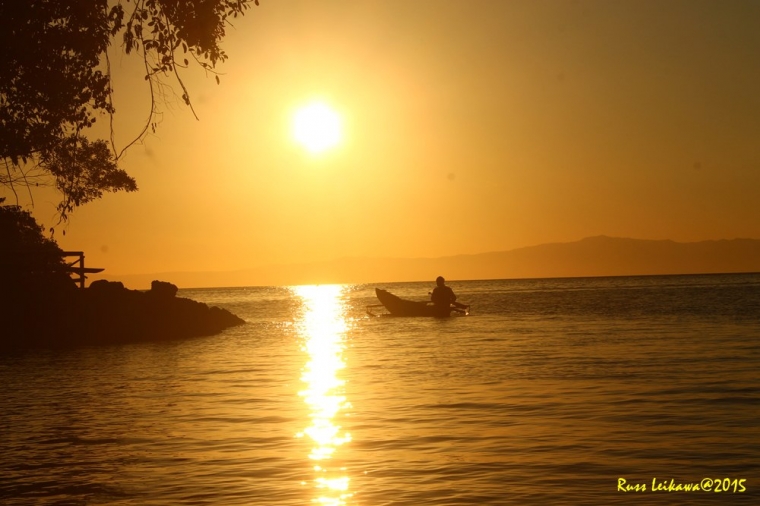
Konon ceritanya, sekitar tahun 1600-an yang lalu, datang seorang Lelaki dari Negeri Hutumury yang bernama “Nalu”, beliau datang seorang diri untuk membantu masyarakat yang ada di Benteng Kapahaha melawan para penjajah (VOC Belanda).
Nalu yang waktu itu datang dengan perahu dan mampir disalah satu dusung yang tidak jauh dari benteng Kapahaha. Dusung itu sampai saat ini, warga Morella menyebutnya NAMANALU, yang artinya, Nama; Labuan, dan Nalu; orang pertama yang datang di dusung. Hingga kini dusun Namanalu tersebut dijaga oleh anak cucu Marga Thenu yang ada di Morella.
Pada saat perang Kapahaha, Nalu yang juga disebut warga Morella sebagai Tete Nalu, konong memiliki kekuatan dalam ilmu perang, sehingga dia diangkat oleh para petinggi adat di benteng Kapahaha sebagai Wakil Kapitan Telukabessy.
Dalam lembaga adat Saliwangi Kapahaha, Nalu bersama dengan Telukabessy berada pada Lembaga Pertahanan dan Keamanan. Pada saat setiap melakukan peperangan dirinya selalu ada dibelakang Kapitan Telukabessy.
Nalu tinggal di benteng Kapahaha selama 10 tahun, dan tidak bisa lagi kembali ke Hutumury, karena masyarakat Hutumury yang mulanya beragama Islam telah berpindah keyakinan ke Agama Kristen. Dirinya memutuskan untuk menetap di Kapahaha dan menikah disana hingga melahirkan anak cucu marga Thenu sampai saat ini di Negeri Morella.
Begitulah awal mula penyebutan nama Pantai Namanalu, terkait dengan sebutan lainnya seperti Pantai Lubang Buaya, sebenarnya sampai saat ini, tidak ada pembuktian bahwa adanya buaya di pantai Namanalu, namun berdasarkan cerita turung temurung, warga meyakini di pantai Namanalu memiliki penjaga gaib yang kadang berwujud ikan besar atau pun seekor buaya, Waallahualam, penjaga gaib itu hanya akan muncul bagi orang yang berniat jahat atau pun ingin merusak daerah sekitar.
Jadi tak perlu takut dengan sebutan Lubang Buaya atau pun ragu untuk datang kesana, karena tidak ada buaya di pantai Namanalu, Namun untuk menjaga kelestraian pantai dan laut adalah tanggung jawab kita bersama.
quote "
Blood brothers
The genealogical ties between the adat villages TAMILOUW on Seram island, HUTUMURI and SIRISORI on Saparua island is called BONGSO. It ties Christians as well as Muslims. Basically, there are three kinds of pela or brotherhood in the central moluccan adat culture: the hard, the genealogical and the soft pela.
Bongso or pela gandong is based on genealogical ties, the different villages claim common ancestry and the idiom of kinship is transferred to everyone in the newly allied villages. The hard pela and the genealogical pela are concluded through a powerful oath which is backed up with a terrible curse upon any potential transgressor of the treaty. The exchange of blood seals the brotherhood.


Bibliography:
1. G.E.Rumphius, De Ambonse eilanden onder de VOC, editors C.van Fraassen and H.Straver. Utrecht, LSEM, 2002
2. G.E.Rumphius, De Amboinsche Lantbeschrijvinge, transcript W.Buijze
3. Z.J.Manusama, Hikayat Tanah Hitu, Utrecht, MHM,2002
4. D.M.Thenu, ed., Kisah Persaudaraan Tamilouw, Hutumuri, Sirisori, 1983
5. D.Bartels, In de schaduw van de berg Nunusaku, Utrecht, LSEM,1994
6. The Ambonese Curiousity Cabinet, by G.E.Riumphius, ed. E.M.Beekman 1999
7. Reuni Pesta Silsilah Keluarga Thenu Hituhila, penulis Drs. Melly Mairuhu, Hutumuri 19 juli 1991
8. Silsilah Musa Thenu, Capelle a/d IJssel
